the battle for the straits how maritine chokepoints shape global power
Maritime chokepoints are critical, narrow sea passages—such as straits and canals—that serve as the "arteries" of the global economy. Because they concentrate a massive volume of trade, energy, and raw materials into limited spaces with few practical alternatives, they act as both vital gateways for prosperity and strategic vulnerabilities for global security. While no single book title matches your exact query, the themes you mentioned—how maritime geography shapes power—are a central subject in modern geopolitics and international relations.
NEWS
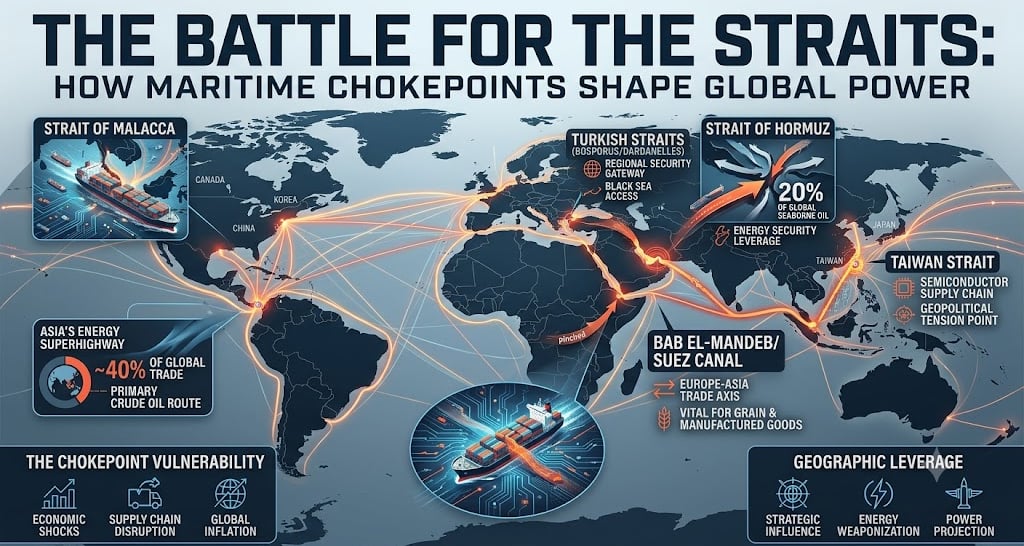
The Strategic Anatomy of Chokepoints
A chokepoint is characterized by three factors: narrowness, indispensability, and a lack of viable alternatives. When these are compromised, the impact is rarely local; it typically triggers a "global strategic shock" that ripples through supply chains within minutes.
Why They Shape Global Power
Weaponized Interdependency: States that control or can influence these chokepoints possess a form of "geographic leverage." Even the threat of disruption can force nations to alter trade policies, adjust insurance premiums, or re-route entire supply chains, as seen with recent conflicts impacting the Red Sea and the Strait of Hormuz.
Economic Cascading Effects: Because modern "just-in-time" supply chains are tightly coupled, a delay at one chokepoint can lead to systemic failures. A blockage (such as the Ever Given in the Suez or recent closures) leads to soaring shipping costs, production halts in sectors like automotive and electronics, and global inflationary pressure.
The Intersection of Geography and Tech: Chokepoints are no longer just about oil and raw materials. As the Taiwan Strait example demonstrates, they now encompass the digital economy. Controlling access to these zones can effectively dictate the global distribution of advanced semiconductors and data infrastructure.
Shifting Strategic Landscapes: Climate change (e.g., droughts in Panama, melting ice in the Arctic creating new routes like the Northern Sea Route) and the rise of "shadow fleets" are forcing a re-evaluation of what constitutes a secure trade route. States are increasingly looking toward "resilience planning" and diversifying routes to circumvent these vulnerable bottlenecks.
The Evolving Global Order
Recent events, such as the 2026 tensions in the Strait of Hormuz, have signaled a shift in the maritime order. There is growing concern among analysts that we are moving toward a period where "tolling" or restricting access to these waterways could become a normalized tool of statecraft. This evolution suggests that the stability of international trade is becoming increasingly contingent upon the security of these narrow passages, turning geography into a permanent, decisive determinant of how global power is exercised today.