Add your promotional text...
What actually the Vitamin b12 is !!
3/24/20262 min read
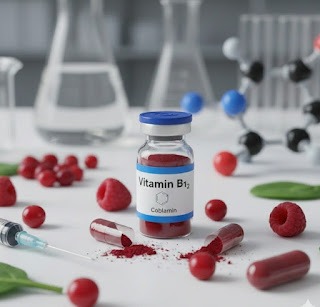

Key Functions of Vitamin B12
Red Blood Cell Formation: B12 is necessary to produce healthy red blood cells and prevents megaloblastic anemia, a condition that causes fatigue and weakness.
Nervous System Health: It is vital for the development and maintenance of the central nervous system and the formation of myelin, which protects nerve cells.
Energy and Metabolism: Vitamin B12 plays a role in protein and fat metabolism and helps convert food into energy, though supplements do not boost energy in individuals who are not deficient.
DNA Synthesis: It helps in the synthesis of DNA, the genetic material in all cells.
New Insights and Research
Recent research provides new perspectives on the role of B12:
Neurocognitive Decline: Studies suggest that even "healthy" or borderline B12 levels might not be enough to prevent subtle neurocognitive decline in older adults, raising questions about current recommended levels.
Alternative Delivery: There is accumulating evidence that high-dose oral B12 supplements (1000 to 2000 mcg daily) are as effective as intramuscular injections for treating deficiency in many cases, offering a more convenient treatment option.
High B12 Levels: There is mounting evidence that raised serum B12 levels may be associated with liver disorders and malignancy, and potentially a higher risk of mortality, though more research is needed to understand the correlation.
Forms of Vitamin B12
B12 is available in several forms, which vary in natural occurrence and how they are used by the body:
Methylcobalamin and Adenosylcobalamin: These are naturally occurring, active co-enzyme forms found in food. Methylcobalamin is often used for nerve health support.
Hydroxocobalamin: This is another natural form often used in prescription injections to treat severe deficiencies, as it stays in the body longer than cyanocobalamin.
Cyanocobalamin: A synthetic, manufactured form commonly used in over-the-counter supplements and fortified foods due to its stability. The body converts it into the active forms after consumption.
Getting Enough Vitamin B12
The recommended daily amount for adults is 2.4 micrograms (mcg).
Food Sources: B12 is found naturally in animal products such as meat, fish, shellfish (clams and liver are especially rich sources), poultry, eggs, milk, and dairy products.
Fortified Foods: For vegetarians and vegans, fortified breakfast cereals, plant-based milks, and nutritional yeasts are good sources.
Supplements: Vitamin B12 is available in oral tablets, capsules, sublingual lozenges, powders, and prescription injections.
If you suspect a deficiency, consult a healthcare provider for a proper diagnosis and treatment plan, as a B12 deficiency can lead to irreversible neurological damage if left untreated.